
Hearty Budae Jjigae: Your New Favorite One-Pot Wonder
Last Updated on May 8, 2026 by beatricerecipez
As the wind picks up and a chill settles in the air, I find myself longing for something warm and delicious to lift my spirits. That s when I turn to the comforting embrace of Budae Jjigae, or One-Pot Korean Army Stew. The rich aroma of simmering garlic, spicy kimchi, and savory broth fills my kitchen as I prepare this dish, taking me back to cozy meals shared with family and friends.
What I love most about Budae Jjigae is its versatility. It s a canvas for creative cooking, allowing you to mix and match proteins and vegetables to suit your taste. Whether you’re a busy professional or a stay-at-home chef, this recipe makes dinner a breeze. Packed with tender ramen noodles and a delightful kick, it’s not just a meal; it’s a hug in a bowl.
Join me as we dive into this heartwarming recipe that embodies the resourcefulness of Korean cuisine. Get ready to savor each bite and make this delicious stew a staple in your kitchen!
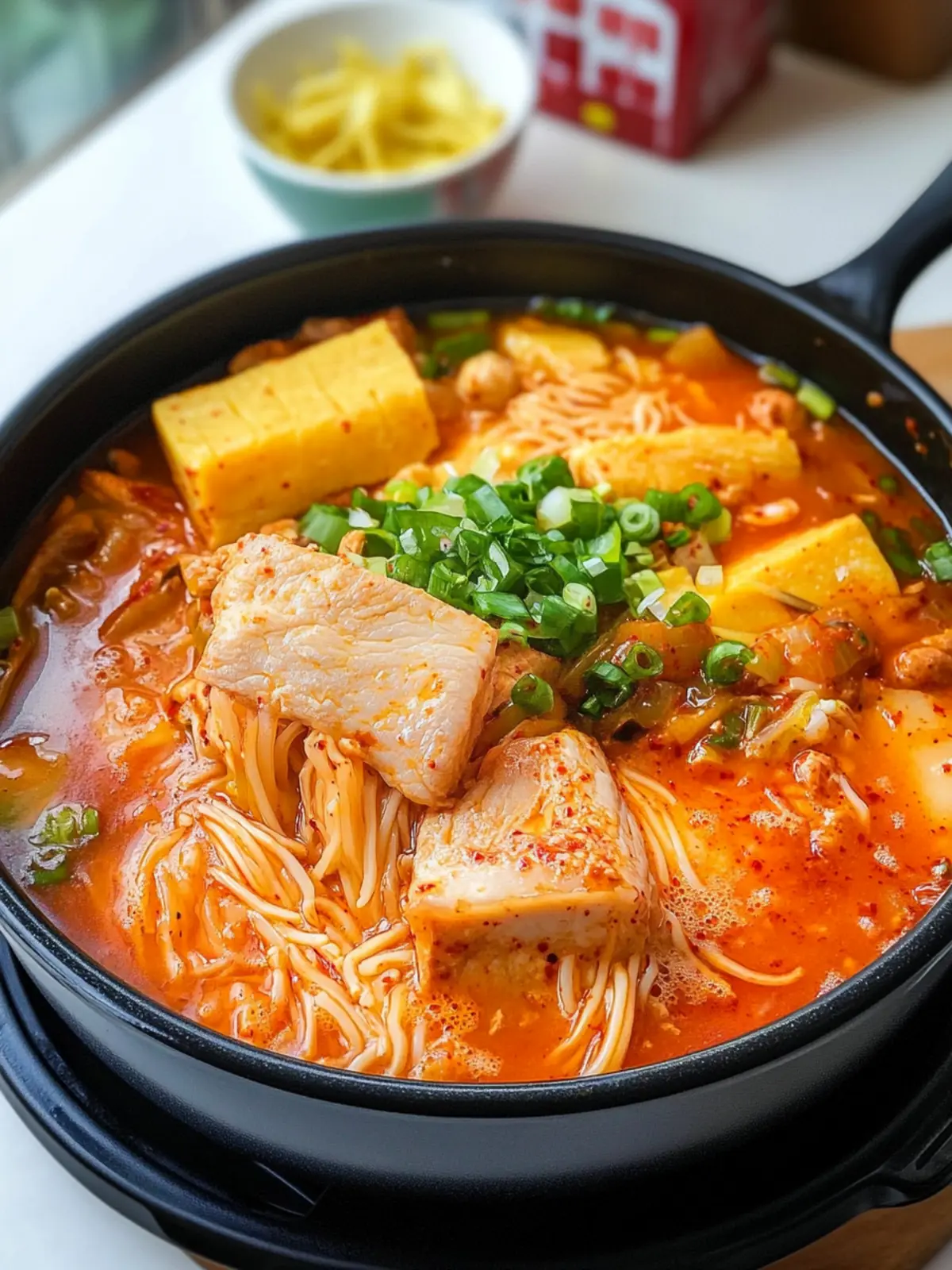
Why is Budae Jjigae a must-try?
Comforting Warmth: This One-Pot Korean Army Stew delivers a soul-soothing warmth that s perfect for chilly nights.
Flavor Explosion: The rich broth, spice from kimchi, and tender noodles create a dynamic taste experience that’s sure to please.
Endless Customization: Feel free to substitute proteins and vegetables based on your preference, making it ideal for any occasion.
Quick and Easy: With just a few simple steps, dinner is ready in no time perfect for busy weeknights.
Crowd-Pleasing Goodness: Budae Jjigae is a hit among friends and family, ensuring everyone leaves the table satisfied.
Ready to elevate your cooking game? Check out some serving suggestions to pair with this delightful dish!
Budae Jjigae Ingredients
For the Broth
- Minced Garlic Adds depth of flavor and aroma; fresh is preferred for potency.
- Gochugaru (Korean Red Pepper Flakes) Provides spice and color; substitute paprika for a milder flavor.
- Gochujang (Korean Chili Paste) Adds umami and heat; adjust quantity for your desired spice level.
- Soy Sauce Contributes saltiness and savory notes; tamari works as a gluten-free substitute.
- Mirin Adds sweetness and complexity; a mix of sugar and water can mimic its sweetness.
- Sugar Balances the spice; brown sugar enhances richness.
- Black Pepper Enhances overall flavor; freshly ground is more aromatic.
For the Proteins
- Spam Provides protein and a savory bite; any cooked sausage can work as a substitute.
- Sausage Adds additional flavor; choose mild or spicy based on your taste.
- Tofu Offers a vegetarian protein option; firm tofu holds its shape better while cooking.
For the Stew
- Rice Cakes (tteok) Delivers a chewy texture; additional noodles can be used if needed.
- Onion Adds sweetness and layers of flavor; shallots can provide a milder taste.
- Enoki Mushrooms Offers texture and umami; any similar mushrooms can be substituted.
- Kimchi Essential for authentic flavor and tang; adjust quantity based on heat preference.
- Ramen Noodles Acts as a filling component; substitute with any noodle type if desired.
- Cheese Optional for creaminess and flavor; American cheese is traditional but mozzarella works too.
Get ready to jump into this delightful recipe that makes Budae Jjigae a cherished choice in your home!
How to Make Budae Jjigae
Prepare the Sauce: In a bowl, combine minced garlic, gochugaru, gochujang, soy sauce, mirin, sugar, and black pepper. Mix until smooth and set aside for later use.
Layer the Ingredients: In a shallow pot, neatly arrange slices of spam, sausage, tofu, rice cakes, onion, enoki mushrooms, and generous amounts of kimchi.
Add Broth and Sauce: Pour the prepared sauce over the arranged ingredients, followed by chicken broth. Cover the pot and bring it to a gentle boil over medium heat.
Cook the Noodles: Once the pot reaches a boil, remove the lid and add ramen noodles and cheese on top. Cover again and cook for an additional few minutes, until the noodles are tender.
Garnish and Serve: Once cooked, garnish your Budae Jjigae with chopped green onions. Serve hot, ideally over a bed of steaming rice.
Optional: Add a sprinkle of sesame seeds for an extra crunch.
Exact quantities are listed in the recipe card below.
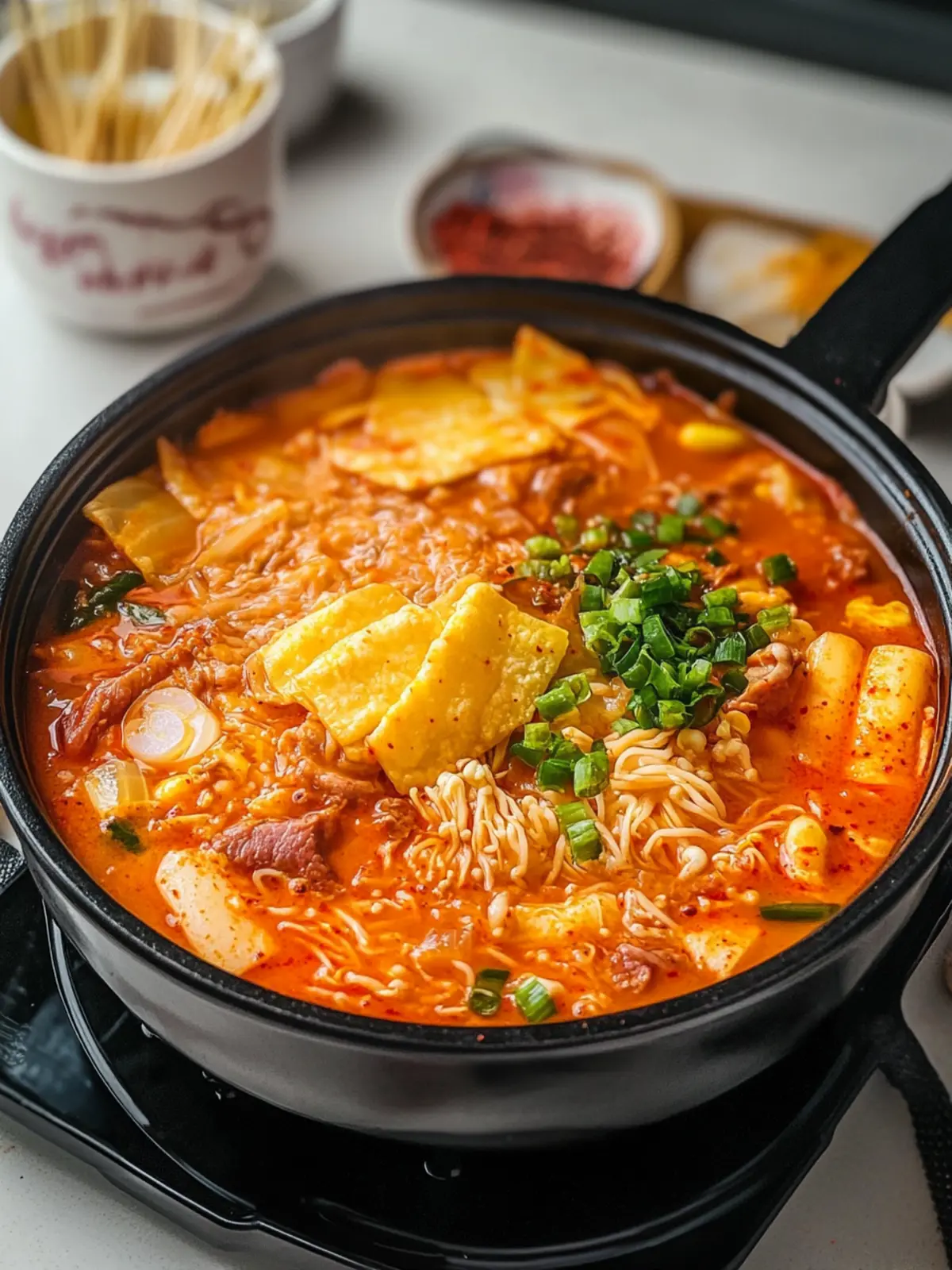
Expert Tips for Budae Jjigae
Prep Ingredients First: Gather and chop all ingredients before cooking. This quickens the process and prevents any rushed mistakes.
Stir Frequently: Keep an eye on the broth while it cooks; stirring occasionally helps prevent scorching and ensures everything cooks evenly.
Adjust Spice Levels: Feel free to modify the amount of gochugaru and gochujang based on your spice tolerance; balance is key in this Budae Jjigae.
Use Fresh Garlic: Opt for fresh minced garlic for a robust flavor; powdered garlic won t provide the same depth.
Garnish Smartly: Don t skip the green onion garnish! It adds a fresh crunch and brightens the overall dish.
Leftovers Bliss: Store leftovers in the fridge; they taste even better the next day as flavors meld beautifully.
Make Ahead Options
Budae Jjigae is a fantastic meal prep option that saves you valuable time during busy weeknights! You can chop your vegetables and proteins (like spam or tofu) up to 24 hours in advance, storing them in airtight containers in the refrigerator to maintain freshness. Additionally, you can prepare the sauce ahead of time and keep it in the fridge for up to 3 days. When you’re ready to enjoy your One-Pot Korean Army Stew, simply arrange the ingredients in the pot, pour in the prepared sauce and broth, and bring it to a boil. This allows for quicker cooking while delivering just as delicious results that your family will love!
Storage Tips for Budae Jjigae
Fridge: Store leftovers in an airtight container for up to 3 days. The flavors intensify as they meld, making it even tastier on day two!
Freezer: Freeze Budae Jjigae in a freezer-safe container for up to 2 months. To prevent freezer burn, ensure the container is airtight and labeled with the date.
Reheating: Reheat on the stovetop over low heat, adding a splash of broth to loosen the stew if necessary. Stir occasionally to heat evenly.
Note: For the best texture, it’s recommended to add noodles fresh during cooking rather than freeze them with the stew. Enjoy your cozy meal over and over!
Budae Jjigae Variations
Feel free to play with this dish and truly make it your own; there’s so much culinary joy to explore!
Greens Boost: Swap mushrooms for bok choy or spinach for a vibrant nutrient boost.
Protein Switch: Use shrimp or chicken for a lighter twist on this hearty stew.
Vegetarian Delight: Omit the meat altogether and add more tofu and vegetables for a delicious plant-based option.
Spice it Up: Introduce fresh chili peppers for an extra kick if you re craving heat.
Rich & Creamy: Stir in coconut milk for a subtly sweet and creamy broth that s absolutely delectable.
Umami Twist: Add a splash of fish sauce for an umami burst that deepens the flavor.
Noodle Fun: Try different noodles like udon or even zoodles for a fun change in texture.
Cheesy Surprise: Experiment with different cheeses like pepper jack for a cheesy, spicy flavor profile.
Embrace the joy of cooking and let your creativity flow in the kitchen!
What to Serve with Budae Jjigae?
As this comforting stew simmers away, consider these delicious sides and complements to create a full, satisfying meal.
Steamed White Rice: This classic pairing absorbs the rich broth, providing a delightful contrast to the hearty stew.
Pickled Vegetables: The sharp tang and crunch of pickled radish or cucumbers balance the dish’s warmth and spice, enhancing every bite.
Korean Pancakes (Pajeon): These savory pancakes offer a crispy texture and burst of flavor that harmonizes beautifully with the stew’s savory notes.
Korean Corn Cheese: This warm, cheesy dish provides a creamy and sweet contrast to the spicy elements of Budae Jjigae, making it a crowd favorite.
Kimchi: Enhance your meal with additional kimchi, providing a zesty crunch that complements the stew’s heartiness and adds a probiotic punch.
Soba Noodle Salad: A cold noodle salad adds a refreshing touch and balances the warmth of the stew with its light, savory dressing.
Elevate your dining experience and enjoy the delightful marriage of flavors and textures with these pairings!
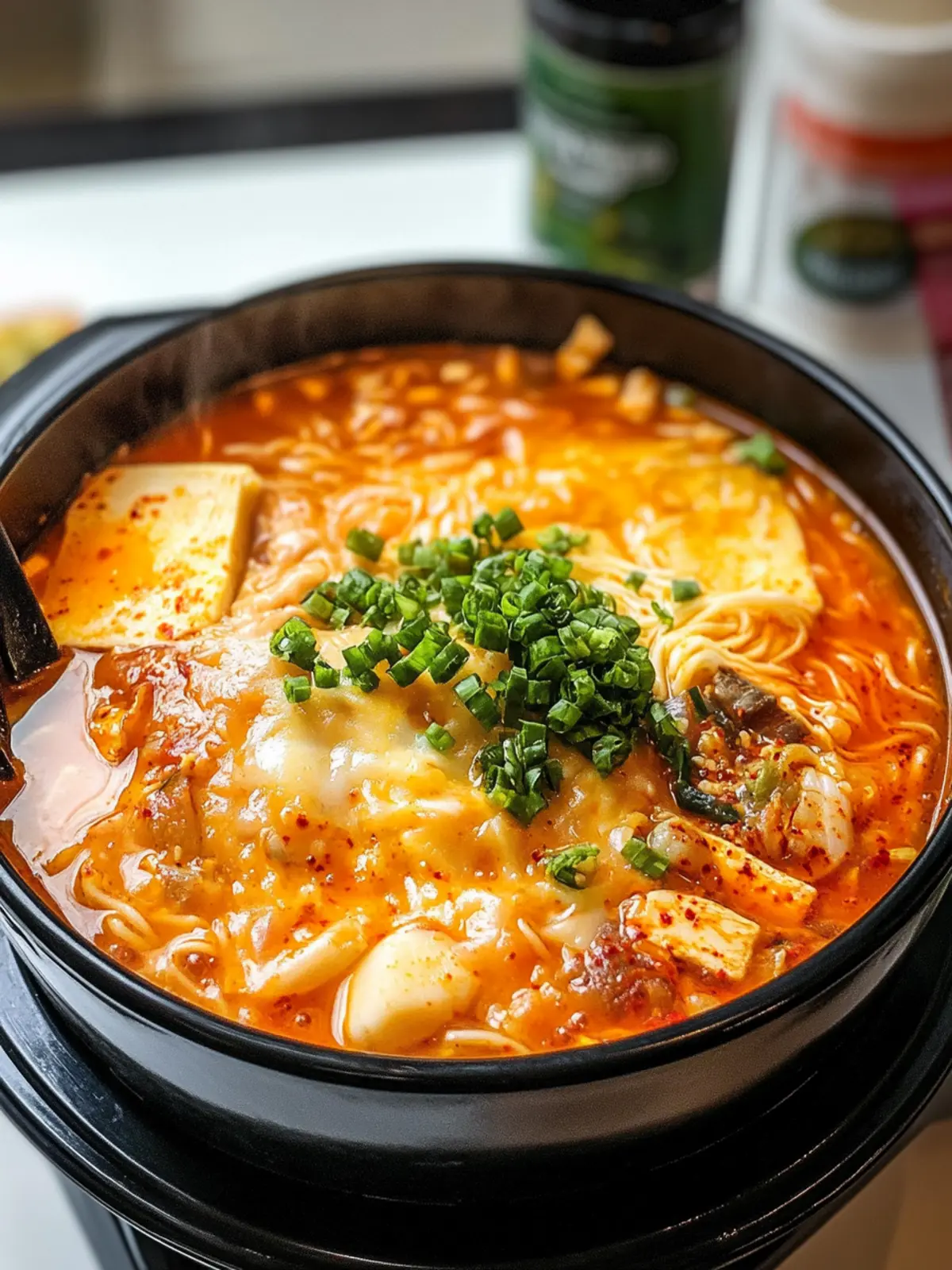
Budae Jjigae (One-Pot Korean Army Stew) Recipe FAQs
What type of kimchi is best for Budae Jjigae?
Absolutely! The best kimchi for Budae Jjigae is a well-fermented, tangy variety that adds the perfect acidity and flavor. Napa cabbage kimchi is traditionally used, but feel free to experiment with other types like radish kimchi based on your palate preference!
How do I store leftovers of Budae Jjigae?
Store your Budae Jjigae leftovers in an airtight container in the refrigerator for up to 3 days. I often find that the flavors intensify as they meld, making it even tastier on the second day!
Can I freeze Budae Jjigae?
Absolutely! You can freeze Budae Jjigae in a freezer-safe container for up to 2 months. To do this, allow the stew to cool, then transfer it to the container. Be sure to label it with the date. When you’re ready to enjoy it, just reheat on the stovetop, adding a splash of broth to loosen it up if needed.
Is there a way to adjust the spice level?
Very much so! You can customize the spiciness of your Budae Jjigae by adjusting the amounts of gochugaru and gochujang. Start with smaller quantities and taste as you go. If you feel it’s getting too spicy, you can always add a bit more sugar or a splash of extra broth to balance the heat.
Can this recipe be made vegetarian?
Yes! To make a vegetarian version of Budae Jjigae, simply omit the meat and increase the quantity of tofu and vegetables. You could also add more hearty vegetables like bok choy or spinach to enhance the dish while keeping it rich and satisfying.
How do I choose the right type of noodle?
For great texture, I recommend using ramen noodles for authenticity, but you can easily substitute them with udon or even rice noodles depending on what you have on hand. For the best results, add the noodles directly into the pot just a few minutes before serving to keep them tender yet firm!