
Taiwanese Pork Rib and Daikon Soup – Your Healthy Comfort Fix
Last Updated on May 8, 2026 by beatricerecipez
As the first hints of chill creep into the air, there’s something undeniably soothing about a warm bowl of soup. That s how I discovered the comfort of Taiwanese Pork Rib and Daikon Soup, a dish that has quickly become a staple in my home. Each sip embodies the rich, tender flavor of pork ribs harmoniously mingling with the mild sweetness of daikon radish, creating a nourishing embrace that s perfect for cozy evenings.
After one particularly busy week, I longed for a meal that was both healthy and effortless. With just a handful of wholesome ingredients and under an hour of cooking, this recipe delivers on all fronts it’s high in protein, packed with minerals, and brimming with flavor. So, if you’re tired of takeout and craving something homemade, let s dive into this delightful Taiwanese classic that will add a warm, satisfying touch to your dinner table!
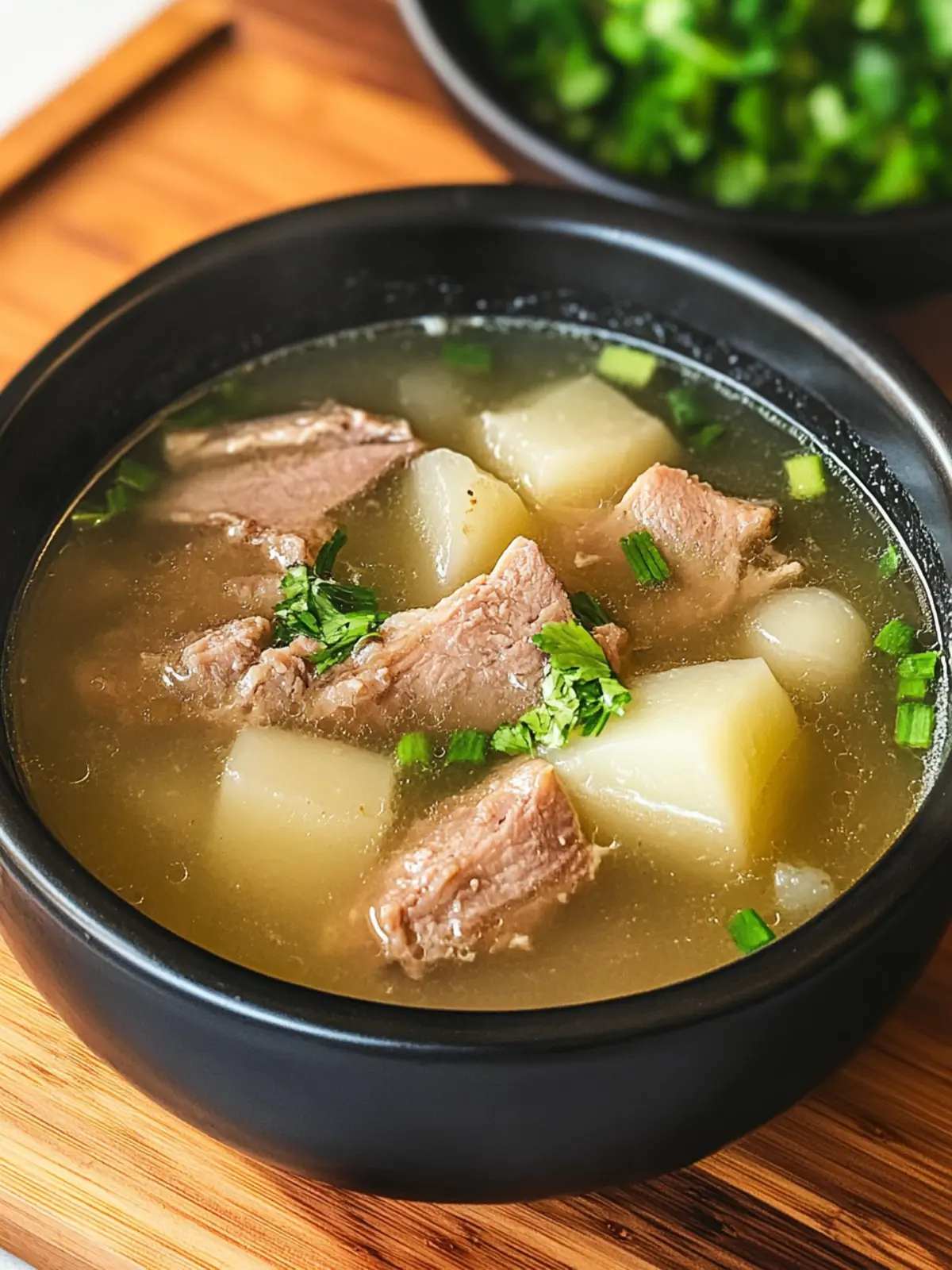
Taiwanese Pork Rib and Daikon Soup worth trying?
Comforting and Nourishing: This Taiwanese Pork Rib and Daikon Soup warms you to the core, making it perfect for chilly evenings.
Quick Prep Time: With minimal effort and just under an hour, you can whip up a healthy meal that truly satisfies.
High in Protein: Enjoy a delicious bowl that fuels your body without sacrificing taste great for post-workout recovery or family dinners.
Customizable Options: Feel free to adapt the vegetables based on your pantry. Add carrots or mushrooms to make it your own!
Family Favorite: This hearty soup not only pleases your palate but also brings everyone to the table, creating cherished mealtime moments.
If you re looking for more comforting options, check out our other health-conscious recipes to elevate your weeknight meals!
Taiwanese Pork Rib and Daikon Soup Ingredients
Discover the simple goodness of Taiwanese Pork Rib and Daikon Soup with these essential ingredients!
For the Soup
- Pork Ribs The main protein source, providing a rich depth of flavor to the broth; feel free to use beef ribs for a different profile.
- Daikon A mild and sweet radish that serves as the primary vegetable; while other radishes can work, expect a change in taste.
- Ginger This fresh root adds warmth and a slight spice, enhancing the overall flavor of the soup.
- Garlic Fresh cloves are ideal for a fragrant and savory depth; they bring the dish alive!
- Salt Essential for seasoning; adjust according to your taste preferences.
- White Pepper Adds a subtle kick, enriching the soup with depth; you can swap it with black pepper, but it will change the color of the dish.
- Cilantro or Scallion These are perfect for garnishing, offering a burst of freshness and visual appeal to your finished soup.
How to Make Taiwanese Pork Rib and Daikon Soup
Blanch the Pork Ribs: Place the pork ribs in a large pot, cover with cold water, and bring to a boil for 3-4 minutes. This step helps remove impurities. Drain the ribs and set them aside.
Combine Ingredients: Return the blanched pork ribs to the pot. Add the chopped daikon, sliced ginger, minced garlic, and enough water to cover everything, about 2 liters.
Boil and Simmer: Bring it all to a boil, then reduce the heat to a gentle simmer. Cover the pot and let it cook for 45 minutes to 1 hour until the ribs are tender and the daikon is soft.
Season the Soup: Taste and add salt and white pepper according to your preference. The flavors will deepen during cooking, so adjust as needed.
Serve Hot: Ladle the hot soup into bowls and garnish with fresh cilantro or sliced scallion for a burst of flavor and freshness. Enjoy your comforting meal!
Optional: Serve with steamed rice or noodles to soak up the delicious broth.
Exact quantities are listed in the recipe card below.
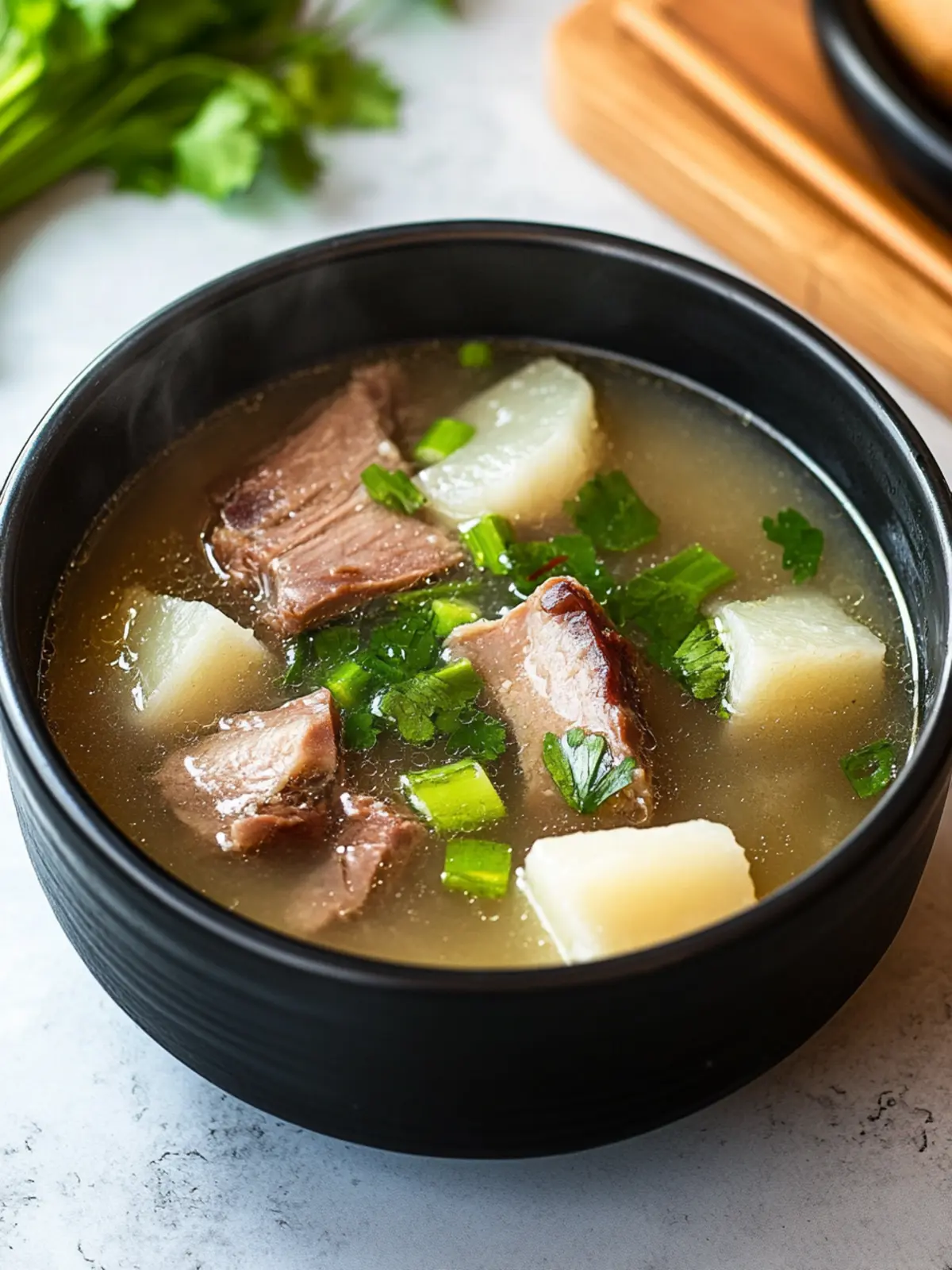
Expert Tips for Taiwanese Pork Rib and Daikon Soup
- Blanching Importance: Ensure you blanch the pork ribs properly to achieve a clear and clean broth. This crucial step removes impurities that can cloud your soup.
- Flavor Depth: Don’t rush the simmering process; let it cook low and slow to extract maximum flavor from the pork and daikon.
- Taste and Adjust: Remember to taste your soup before serving and adjust the salt and white pepper as needed. Flavors deepen over time, so it s best to fine-tune right before serving.
- Texture Check: Watch the cooking time for daikon; it should be tender but not mushy. Overcooking will turn it into a mushy consistency, losing its delightful texture.
- Garnish Freshness: Use fresh cilantro or scallion as a garnish right before serving to add brightness and freshness to your wholesome Taiwanese Pork Rib and Daikon Soup.
Storage Tips for Taiwanese Pork Rib and Daikon Soup
Fridge: Store the soup in an airtight container for up to 4 days. Let it cool completely before sealing to maintain freshness.
Freezer: For longer storage, freeze the soup for up to 2 months. Use freezer-safe containers or bags, leaving space for expansion.
Thawing: When ready to enjoy, thaw the soup overnight in the refrigerator. This slow thawing process helps retain the flavors of the Taiwanese Pork Rib and Daikon Soup.
Reheating: Gently reheat on the stove over medium heat, stirring occasionally until heated through. If needed, add a splash of water to adjust the consistency.
Taiwanese Pork Rib and Daikon Soup Variations
Don t hesitate to get creative and personalize your dish with these fun twists and substitutions!
- Beef Ribs: Swap the pork ribs for beef ribs to introduce a richer flavor profile.
- Vegetable Boost: Toss in carrots, mushrooms, or your favorite greens for added nutrition and color.
- Spicy Kick: Add sliced chili peppers or a dash of chili oil for a delightful heat that elevates the soup.
- Reduced Sodium: Use low-sodium broth or omit the added salt for a healthier soup without sacrificing taste.
For a more significant twist, consider this: blending a portion of the soup and stirring it back in can create a creamy texture while maintaining the hearty essence.
- Herb Infusion: Enhance flavor by adding fresh herbs like thyme or lemongrass during cooking for a fragrant aroma.
- Ginger Variance: Experiment with grated turmeric for a warm, earthy flavor and a pop of color against the daikon.
- Citrus Zing: Squeeze in some fresh lime or lemon juice right before serving to brighten up the flavors!
Let your creativity shine and enjoy this nourishing soup in ways that delight your palate!
What to Serve with Taiwanese Pork Rib and Daikon Soup?
Cozy up to your dinner table with delightful side dishes that beautifully complement this warm, nourishing bowl of goodness.
Steamed Jasmine Rice: The fluffy texture and fragrant flavor of jasmine rice perfectly soak up the savory broth, enhancing each delightful bite.
Garlic Noodles: Their rich, buttery taste adds a luxurious touch to your meal, transforming simplicity into something extraordinary. Toss in a splash of soy sauce for added umami.
Pickled Vegetables: A tangy contrast to the comforting soup, these vibrant, crunchy bites add a refreshing zest that balances the richness of the pork.
Chilled Cucumber Salad: The cool crunch of cucumbers tossed in rice vinegar and sesame oil provides a refreshing side, lightening up the meal wonderfully.
Steamed Bok Choy: This delicate green veggie brings a tender bite and slight bitterness, enhancing flavors while contributing extra nutrients to your plate.
Hot Green Tea: A warm cup of this soothing beverage wonderfully balances the richness of the soup, aiding digestion and offering calming comfort during your meal.
Custard or Milk Tea: If you’re craving something sweet afterward, a creamy custard or a cozy milk tea provides the perfect ending, wrapping up your nourishing experience beautifully.
Create your ideal spread with these pairings to craft a heartwarming dining experience that satisfies all senses!
Make Ahead Options
Preparing your Taiwanese Pork Rib and Daikon Soup in advance is a fantastic way to save time on busy weeknights! You can blanch the pork ribs and store them in the refrigerator for up to 24 hours before proceeding with the recipe. Simply cover the blanched ribs with plastic wrap or place them in an airtight container to maintain their freshness. Additionally, you can chop the daikon and other vegetables ahead of time, storing them in a sealed container in the fridge for up to 3 days. When you’re ready to enjoy the soup, just combine the prepped ingredients in your pot, add water, and simmer as directed. You ll still have that comforting, nourishing flavor that s just as delicious as if you made it fresh!
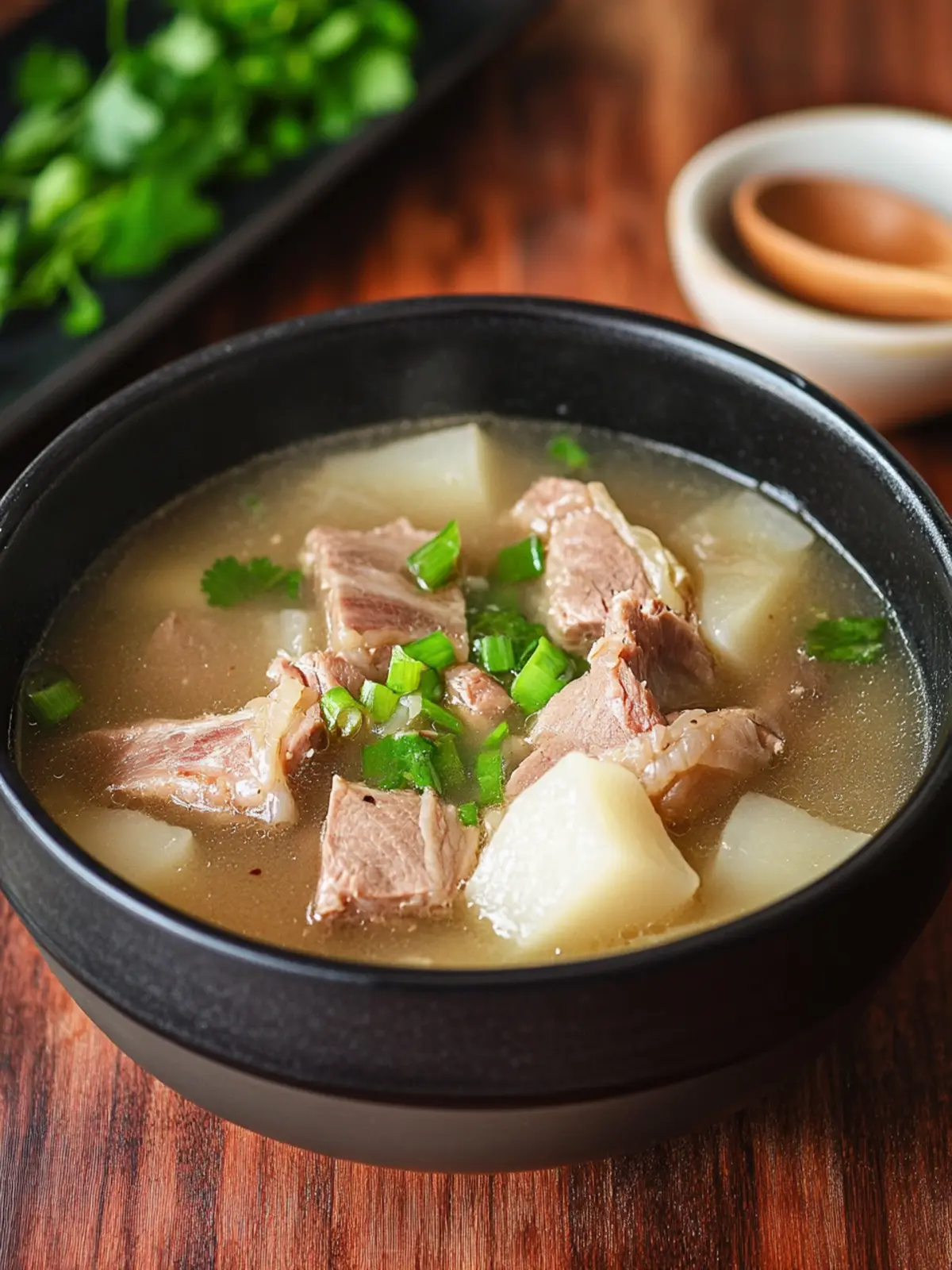
Taiwanese Pork Rib and Daikon Soup Recipe FAQs
What s the best way to select ripe daikon radish?
Absolutely! When choosing daikon radish, look for firm and smooth skin without any dark spots or blemishes. A good daikon should feel heavy for its size, indicating juiciness. Fresh daikon is typically a creamy white color, so steer clear of those that appear wrinkled or have soft spots, as these can affect your soup’s texture and flavor.
How long can I store Taiwanese Pork Rib and Daikon Soup in the fridge?
You can store your soup in an airtight container in the fridge for up to 4 days. To preserve its freshness, let it cool completely before sealing. This method helps maintain the soup’s flavor and prevent it from becoming overly thick or mushy.
Can I freeze the Taiwanese Pork Rib and Daikon Soup?
Yes! For longer storage, you can freeze this delicious soup for up to 2 months. Use freezer-safe bags or containers, and remember to leave some space at the top since the soup will expand when frozen. When you’re ready to enjoy it, simply thaw the soup overnight in the refrigerator and then reheat gently on the stove.
What should I do if my daikon becomes too mushy when cooking?
If your daikon has turned mushy, don t worry! This can happen if it s overcooked. Next time, try adding the daikon halfway through the cooking process instead of at the beginning. This way, it will cook quickly while maintaining some of its firmness and preventing that overly mushy texture.
Are there any dietary considerations for this soup?
Very much so! This soup is generally gluten-free and dairy-free, making it suitable for most diets. However, check for any specific allergies, especially with the use of pork and spices. You can also adapt it easily; for instance, substituting beef ribs if pork isn’t suitable for you, or using less salt to accommodate dietary restrictions.
How can I enhance the flavor of the soup without adding calories?
You can boost the flavor without extra calories by adding fresh herbs like cilantro or scallions toward the end of cooking. Beyond that, a splash of low-sodium soy sauce or a hint of sesame oil during the simmering process can elevate the soup s taste beautifully without compromising its healthy profile!