
Quick and Easy Poached Fish with Soy Glaze for Flavor Lovers
Last Updated on May 8, 2026 by beatricerecipez
The first time I prepared poached fish with soy glaze was after a particularly hectic week when takeout felt like the only option. As the fish gently simmered, I could already smell the warm, inviting hints of garlic and ginger wafting through the kitchen, transforming my home into a cozy culinary retreat. This delightful dish, which comes together in just 10 minutes, is a perfect antidote for those fast-food blues simple enough for a weeknight yet elegant enough to impress.
Each flaky bite of the fish, drenched in a rich soy glaze infused with spring onion and garlic, brings a satisfying umami punch that feels restaurant-quality. Best of all, it s gluten-free, low-calorie, and diabetic-friendly, making it a versatile addition to any meal plan. Whether you re a seasoned chef or a novice eager to break free from the chains of quick meals, this poached fish recipe promises to be a joyous addition to your kitchen repertoire. Get ready to savor the harmony of flavors that will leave your taste buds dancing!
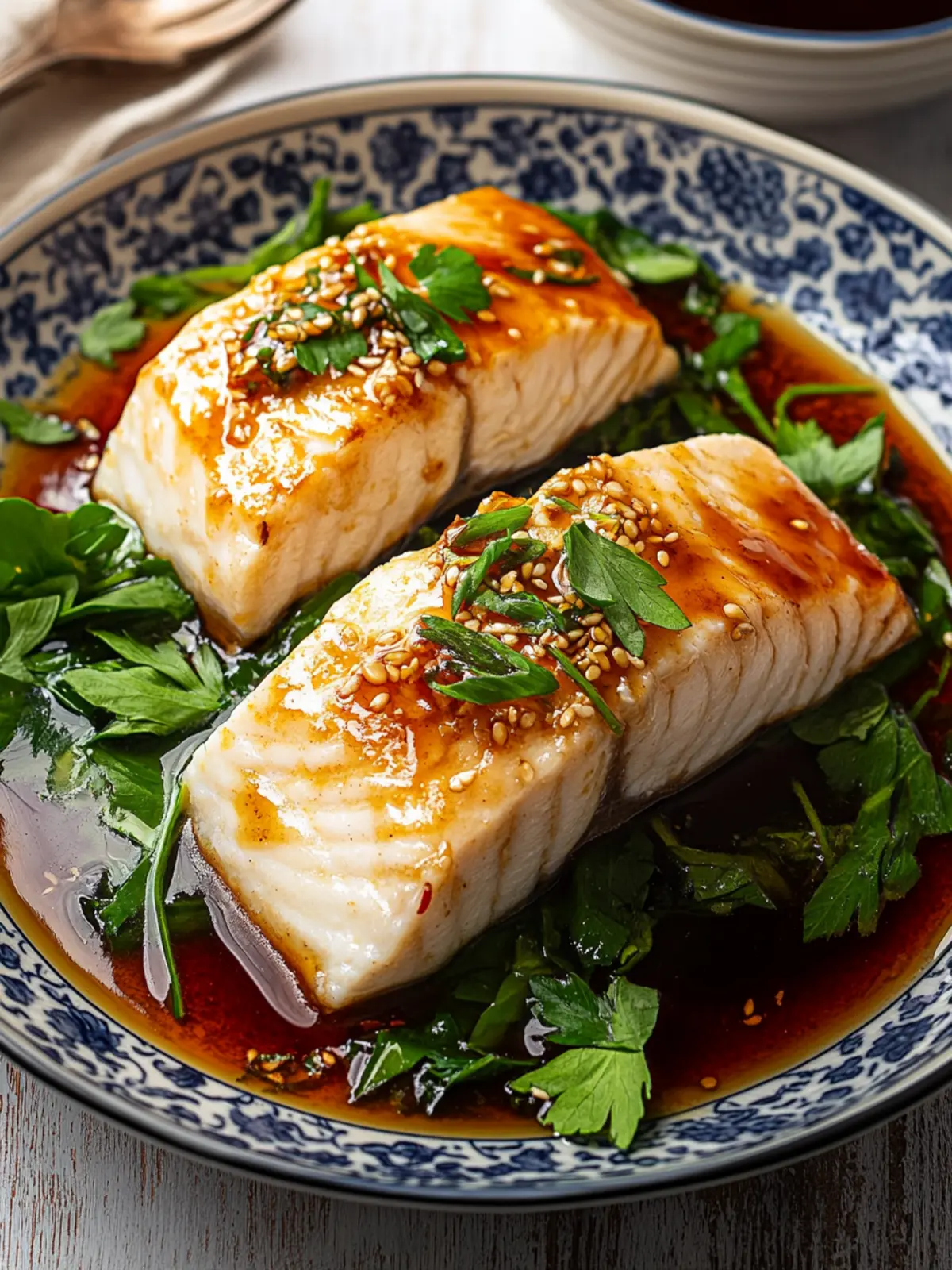
Why is Poached Fish with Soy Glaze a must-try?
Simplicity: Enjoy a gourmet dish without fuss it takes just 10 minutes!
Elevated Flavor: The rich soy glaze combined with ginger and garlic creates a taste sensation that feels indulgent.
Healthy Choice: This dish is gluten-free, low-calorie, and diabetic-friendly, accommodating various dietary needs effortlessly.
Versatile: Perfectly adaptable swap fish for shrimp or tofu, or spice things up with chili flakes!
Impressive Presentation: Served beautifully, this dish will wow family and friends at any gathering.
Make sure to serve it over steamed rice or veggies to soak up that delicious glaze!
Poached Fish with Soy Glaze Ingredients
To create this irresistible Poached Fish with Soy Glaze, gather these simple yet essential ingredients.
For the Fish
- Fish Fillets Opt for fresh fillets like cod or salmon for the best texture and flavor.
- Oil Use 5 tablespoons of neutral oil for sautéing; olive oil is a great healthier alternative.
For the Soy Glaze
- Soy Sauce One tablespoon is key for the umami flavor; high-quality soy sauce makes a noticeable difference!
- Rice Wine Two tablespoons enhance the glaze beautifully; cooking sherry serves as a fine substitute.
- Sugar Half a teaspoon balances the saltiness; consider using honey for a natural sweetness.
- Ginger Three slices add warmth and aroma to the sauce.
- Garlic Three cloves contribute that inviting, mouthwatering flavor.
For Assembly
- Spring Onion Use one finely chopped for the glaze and save some for garnish to brighten your dish.
- Sesame Seeds A teaspoon of these gives a delightful crunch; they are perfect for presentation, too!
Once you have these ingredients ready, step into the magic of cooking as you transform ordinary fish into an extraordinary experience!
How to Make Poached Fish with Soy Glaze
Make the Soy Glaze:
In a bowl, combine soy sauce, rice wine, sugar, and ¼ cup of water. In a saucepan, heat a tablespoon of oil and sauté chopped spring onion, ginger, and garlic until lightly browned. Then, add the sauce mixture, reduce heat, cover, and cook for about 5 minutes. Drain and set aside.Poach the Fish:
Fill a medium saucepan with water, ensuring it covers the fish by 5-10 cm, and bring it to a boil. Add the fish to the boiling water for 1 minute, then turn off the heat, cover the pan, and let it poach for 5-7 minutes, depending on the thickness of the fillets. Use a fork or chopstick to check if the fish is cooked through.Assemble the Dish:
In another saucepan, heat 3 tablespoons of oil with sesame seeds until they are light brown. Place finely chopped spring onion over the fish and pour the hot oil mixture over the top. Finally, drizzle with the soy glaze.
Optional: Garnish with extra spring onion slices for a pop of color and flavor.
Exact quantities are listed in the recipe card below.
Make Ahead Options
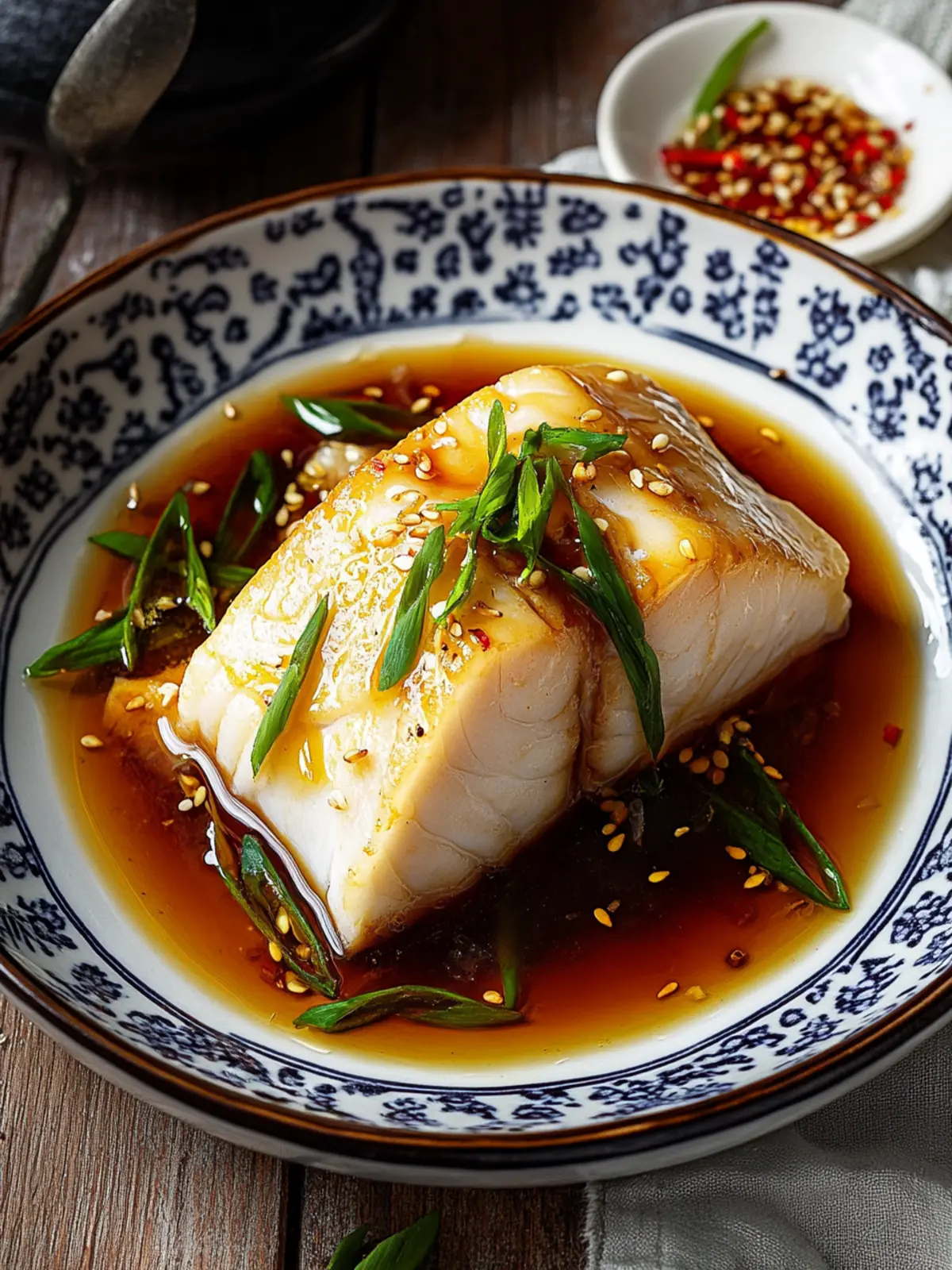
These Poached Fish with Soy Glaze are perfect for busy home cooks looking to save time during hectic weeknights. You can prepare the soy glaze up to 24 hours in advance; simply keep it refrigerated in an airtight container. Additionally, you can poach the fish and store it covered in the fridge for up to 3 days. When you’re ready to serve, gently reheat the fish in a steamer or microwave to prevent overcooking, and then drizzle with the chilled glaze. This way, you ll enjoy a delectable, restaurant-quality meal in minutes while keeping flavors intact, ensuring your family delights in the same comforting taste!
Expert Tips for Poached Fish with Soy Glaze
- Fresh Fish is Key: Use the freshest fish fillets for the best flavor and texture; it makes a significant difference in your poached fish with soy glaze.
- Avoid Overcooking: Keep a close eye on the fish it should flake easily with a fork. Poaching is quick, so be diligent in timing.
- Minimal Handling: When lifting the delicate fillets from the water, use a large spoon gently to prevent breaking the fish.
- Choice of Soy Sauce: Opt for high-quality soy sauce; it enhances the umami flavor and elevates this simple dish to gourmet status.
- Safety First: To prevent accidents, keep children away from the stovetop while you’re working with hot oil during assembly.
Poached Fish with Soy Glaze Variations
Feel free to make this delightful dish your own by exploring exciting variations that cater to your taste buds!
- Shrimp Swap: Use shrimp instead of fish for a seafood twist; just adjust cooking time for perfect tenderness.
- Tofu Delight: For a vegetarian option, cube firm tofu and poach it in the same soy glaze for a protein-packed dish.
- Chili Kick: Stir in some chili flakes into the soy glaze for a spicy punch that elevates the flavor profile beautifully.
- Garlic Infusion: Add more garlic, or even roasted garlic, for a deeper, richer flavor that complements the soy glaze.
- Herb Boost: Toss in fresh herbs like cilantro or basil after cooking to add a refreshing aroma and vibrant color!
- Citrus Zest: A splash of lime or lemon juice in the glaze can brighten the dish and add a delightful zing.
- Nutty Crunch: Swap sesame seeds for crushed peanuts for an unexpected crunch and a different nutty flavor element.
- Non-Soy Glaze: Use coconut aminos as a soy sauce alternative for a sweeter, gluten-free glaze that doesn t skimp on flavor.
Feel inspired? Each variation adds its unique touch to the hearty poached fish with soy glaze, inviting you to create a dish that s distinctly yours!
What to Serve with Poached Fish with Soy Glaze?
Imagine the comforting aroma of a home-cooked meal filling the air, perfectly complemented by vibrant textures and flavors.
Steamed Jasmine Rice: This fragrant rice soaks up the delicious soy glaze, making every bite a heavenly experience. A warm bowl adds a comforting base for your dish.
Sautéed Bok Choy: Lightly sautéed with garlic, this fresh vegetable brings a lovely crunch and a hint of bitterness, balancing the rich flavors of the fish beautifully.
Cucumber Salad: A refreshing salad with thinly sliced cucumbers in rice vinegar provides a crisp contrast to the poached fish. It s light and adds a zesty note to your meal.
Quinoa Pilaf: Nutty quinoa cooked with vegetable broth adds a delightful texture and nuttiness that pairs surprisingly well with fish.
Miso Soup: The warm umami flavors of miso soup can round out your meal, giving it a classic Japanese touch while complementing the soy glaze.
Light Green Tea: Serving a warm cup of green tea not only aids digestion but also enhances the meal s overall freshness, making it enjoyable from start to finish.
Mango Sticky Rice: For dessert, this sweet treat is a delicious ending, combining creamy coconut with the tropical sweetness of mango for a delightful contrast to the savory fish.
How to Store and Freeze Poached Fish with Soy Glaze
Fridge: Store leftover poached fish in an airtight container for up to 2 days. Ensure the dish is fully cooled before sealing to maintain freshness.
Freezer: For longer storage, freeze poached fish in a freezer-safe bag for up to 3 months. Be sure to remove excess air to prevent freezer burn.
Reheating: When ready to enjoy, gently reheat the fish in a pan on low heat, adding a splash of water or broth to keep it moist. Alternatively, use the microwave but cover the dish to prevent drying out.
Serving Tip: If re-melting the soy glaze, do so on low heat for a balanced flavor when serving again.
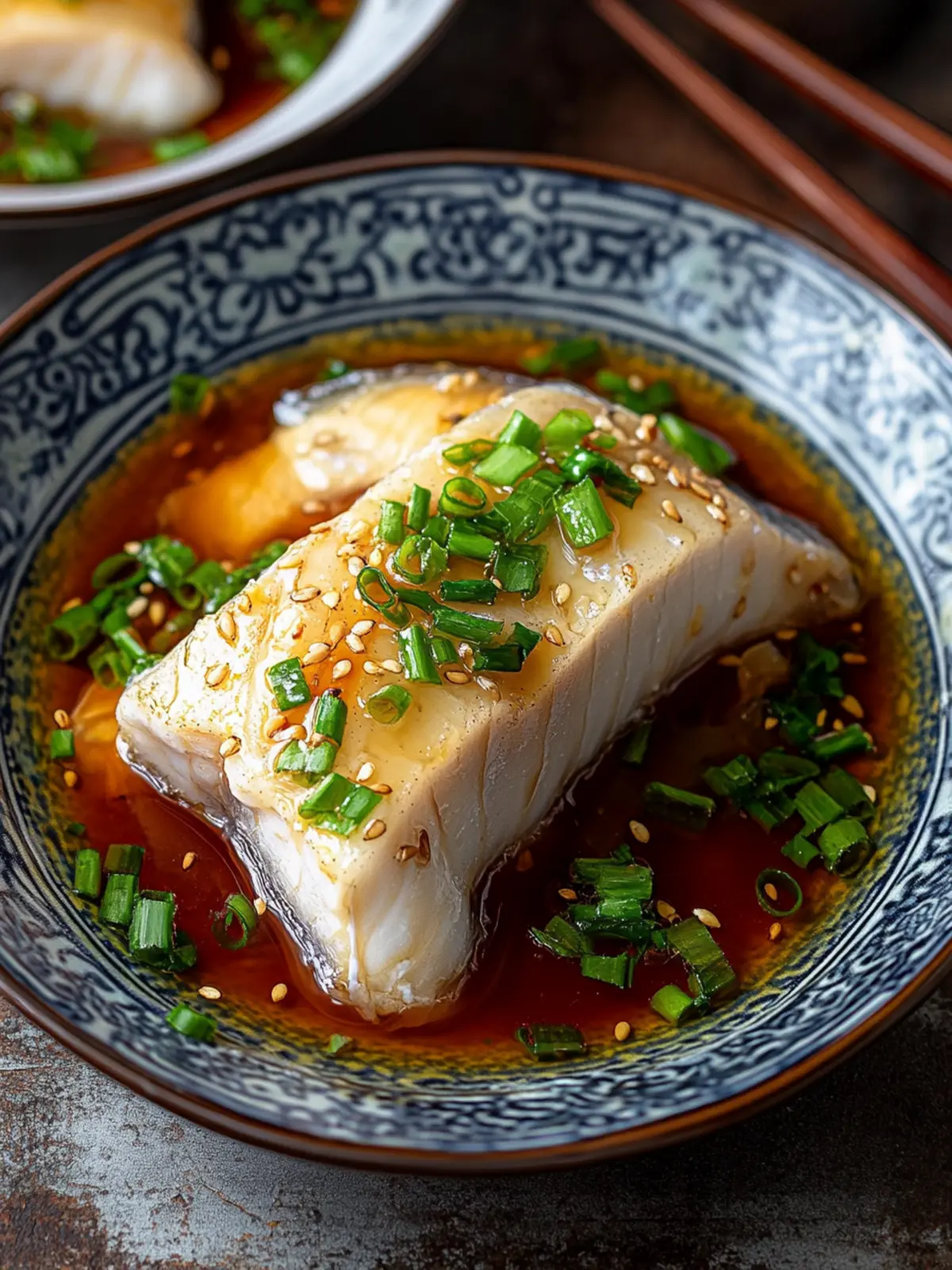
Poached Fish with Soy Glaze Recipe FAQs
How do I choose fresh fish for my recipe?
Absolutely! Look for fish fillets that are bright and shiny, with no dark spots or odor. Fresh fish should also feel firm to the touch and have a slightly sweet scent. If you’re buying whole fish, the eyes should be clear, not cloudy.
How should I store leftovers of poached fish with soy glaze?
It’s important to store any leftovers in an airtight container in the fridge. They can last for up to 2 days. Make sure the fish is completely cooled before sealing the container to keep it fresher for longer.
Can I freeze the poached fish with soy glaze?
Yes! To freeze, place the cooled fish in a freezer-safe bag, removing as much air as possible, and store it for up to 3 months. When you’re ready to eat, simply thaw it overnight in the fridge and reheat gently.
What should I do if my fish is overcooked?
If you find your fish has become overcooked, fear not! You can create a delicious sauce to bring moisture back to the dish. Mix a splash of soy sauce with a bit of water or broth, then pour it over the fish before serving. This will enhance flavor and improve texture, making it more enjoyable!
Is this recipe suitable for individuals with food allergies?
Definitely! This poached fish with soy glaze can be adapted for various dietary needs. To make it gluten-free, choose gluten-free soy sauce. If there are concerns about seafood allergies, you can substitute fish with firm tofu or shrimp, which can provide a delightful alternative without compromising taste.
How do I know when the fish is done poaching?
To check if your fish is fully cooked, use a fork or chopstick to gently flake the thickest part of the fillet. The fish should be opaque and flake easily. It’s best to poach on low heat after the initial boiling to maintain tenderness; this gentle cooking ensures it doesn t dry out.